 Olivia Møller
Freediver - Activist - Explorer
Olivia Møller
Freediver - Activist - Explorer
Share this on
Olivia Møller
Freediver - Activist - Explorer



There is a particular stillness in the early hours, before the first meal of the day, when the body feels light and the ocean seems to breathe in time with you. Many freedivers are drawn to that sensation. The stomach is empty, the mind feels sharper, and the dive seems to unfold with a purity that is hard to describe. This is the essence of fasted freediving, a practice that has gained quiet popularity in recent years. It promises clarity, focus, and improved adaptation. Yet beneath its simplicity lies a complex physiology that demands respect.
To understand the truth about training on empty, we need to look past the romantic appeal and into the science of how the body performs when deprived of immediate fuel. Freediving is the art of balance, and nowhere is that balance more delicate than when energy, oxygen, and mental calm intersect.
When you dive on an empty stomach, your body enters the water in a fasted state. This means that your last meal has been digested and absorbed, and your blood glucose levels are relatively low. The liver has begun converting stored glycogen into glucose to maintain brain function and energy supply, while muscles rely more heavily on fat oxidation to produce energy. This shift toward fat metabolism is what makes fasted training appealing to many athletes: it can enhance metabolic efficiency and improve the body’s ability to use fat as a long-term energy source.
However, freediving is unlike other sports. It operates under hypoxic and hyperbaric conditions, where oxygen is scarce and pressure is high. In this environment, fat metabolism is less efficient because it requires more oxygen to release the same amount of energy as carbohydrates. A muscle working on fat alone consumes more oxygen for less output. That means in fasted conditions, your energy system is operating at a higher oxygen cost, leaving less available for vital organs and mental focus.
This does not make fasted freediving inherently bad, but it does change the equation. The body’s priorities shift. It preserves oxygen for the brain and heart while limiting muscular intensity. Many divers describe a slower, more introspective rhythm during fasted dives. This is not purely psychological. It is the physiological outcome of an energy system running on conservation mode.
Fasted freediving is attractive because of how it feels. With an empty stomach, the diaphragm moves more freely. The pressure of food against the stomach and abdominal wall is absent, allowing for deeper, more comfortable inhalation. Many divers find that equalization feels easier, and the mental state more relaxed. The body is light, unburdened, and quiet. This physical comfort translates into a perception of improved connection with the water.
There is also a psychological purity to diving fasted. The act aligns with freediving’s minimalist philosophy, entering the ocean without excess, relying on internal resources rather than external inputs. It feels natural and instinctive, echoing the ancestral conditions in which humans once dove for survival. Yet this clarity comes with physiological trade-offs that must be managed carefully.
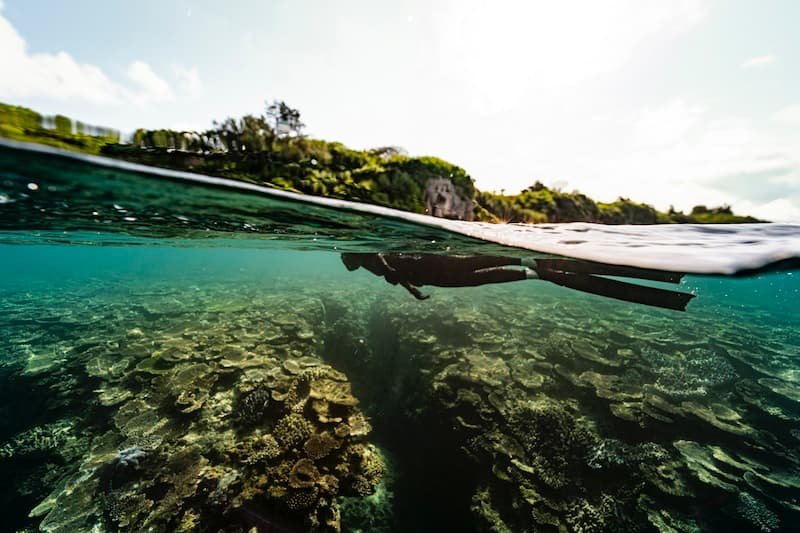
Every movement underwater, from the slow extension of a fin stroke to the micro-adjustments in body posture, consumes energy. That energy comes from adenosine triphosphate, or ATP, the universal fuel for muscle contraction. In a fed state, ATP is replenished efficiently through carbohydrate metabolism. In a fasted state, glycogen reserves are lower, and fat oxidation becomes the dominant source of energy. The problem is that fat oxidation cannot keep up with rapid energy demands, especially during deep or dynamic dives where muscle effort spikes.
When glycogen is depleted and carbohydrate intake is low, performance often declines subtly before it is consciously noticed. Muscle contractions feel heavier, lactic acid accumulates faster, and recovery between dives lengthens. Over time, repeated training sessions in a fasted state can lead to a chronic energy deficit. This not only affects physical output but can also impair immune function, hormone regulation, and mood stability.
Freedivers often pride themselves on endurance and mental resilience, but physiology still governs performance. No matter how disciplined the mind, the body cannot escape the mathematics of metabolism. Oxygen and glucose remain the two currencies that define the boundaries of human performance underwater.
The fasted state triggers hormonal changes that influence both performance and recovery. When blood glucose drops, insulin levels decrease and the body increases production of glucagon and cortisol to mobilize energy from internal stores. This hormonal response encourages fat breakdown, but it also elevates stress levels. Cortisol, in particular, can affect muscle repair and immune function when chronically elevated.
In moderation, these hormonal shifts are adaptive. Training occasionally in a fasted state can teach the body to better utilize fat and maintain performance with less available glucose. This metabolic flexibility can be beneficial for long training days or multi-dive sessions where energy sources vary. However, consistent fasted training without adequate recovery or nutrition afterward can backfire. It can suppress thyroid activity, lower testosterone, and reduce the production of leptin, a hormone that regulates energy balance.
The result is a state of low energy availability that feels like chronic fatigue. Many divers misinterpret this as overtraining or mental burnout, when in fact the issue lies in nutritional imbalance. The body cannot sustain adaptation without sufficient fuel.

One of the most commonly reported benefits of fasted freediving is improved mental clarity. The absence of digestion and post-meal sluggishness can create a sense of heightened awareness. Blood flow is directed away from the gut and toward the brain and muscles, contributing to an alert, focused state. Ketones, produced when the body breaks down fat for energy, can also provide an alternative fuel source for the brain, further enhancing concentration.
This can be valuable during training that prioritizes technique, relaxation, or mental control rather than maximum performance. Many divers use morning fasted sessions to practice equalization or static breath-holds, where energy demand is low, and focus is paramount. The problem arises when this subjective sharpness is mistaken for physiological readiness. Feeling light and clear does not necessarily mean the body is primed for high effort. During deep dives or repetitive sessions, depleted energy reserves can compromise safety by increasing the risk of hypoglycemia, blackouts, or delayed recovery.
Understanding this distinction is key. Fasted freediving can enhance mindfulness, but it should not replace proper fueling when intensity or depth is the goal.
There is a practical reason why many freedivers prefer to train without eating first. The pressure changes of descent can cause discomfort or nausea if food is present in the stomach. An empty stomach minimizes bloating and reduces the likelihood of regurgitation, especially during deep dives where equalization and abdominal contractions are intense. The diaphragm’s ability to expand freely is essential for full lung inflation and efficient packing. Even a small meal can restrict that movement and create unnecessary tension.
This is why most freedivers eat lightly, even when training later in the day. The goal is not complete fasting but digestive comfort. Foods high in fat or fiber delay gastric emptying, while light carbohydrates digest quickly and provide energy without discomfort. The line between a fasted dive and a lightly fueled one can be thin, but the physiological difference is significant.
What happens after the dive is as important as what happens before it. A body that trains fasted is already running at a deficit. Replenishing glycogen and protein after a session is crucial to prevent muscle breakdown and hormonal imbalance. The post-dive meal restores not only physical energy but also the parasympathetic recovery state that defines freediving as a restorative practice.
Neglecting recovery nutrition can dull progress over time. Without carbohydrates, muscle glycogen remains low. Without protein, tissue repair slows. Over weeks or months, the diver begins to feel flat, less responsive, and more fatigued. Recovery becomes longer, and performance plateaus. This is the silent cost of excessive fasting. The body adapts not only to what it experiences but also to what it is consistently deprived of.
The question is not whether to train fasted, but how often and under what conditions. Occasional fasted sessions can strengthen metabolic efficiency and mental discipline. Constant fasting, however, turns adaptation into depletion.
Fasted freediving carries specific risks that require awareness. Low blood glucose levels can lead to dizziness, confusion, or delayed reaction time, all dangerous in the water. In extreme cases, hypoglycemia can contribute to blackouts, especially during prolonged breath-holds. These effects may appear without warning. Because freediving already reduces oxygen delivery to the brain, even mild hypoglycemia can amplify risk.
Hydration also becomes critical in the fasted state. Without food intake, electrolyte levels can drop more quickly, affecting muscle function and nerve signaling. Dehydration increases the likelihood of cramps and delays recovery. Many divers who train fasted underestimate this and neglect to drink adequately before entering the water.
There is also a psychological component to risk. Training on empty can reinforce a mindset of deprivation or endurance at all costs. Freediving thrives on calm and balance, not self-punishment. When fasting becomes a badge of discipline rather than a tool for self-awareness, it loses its purpose.
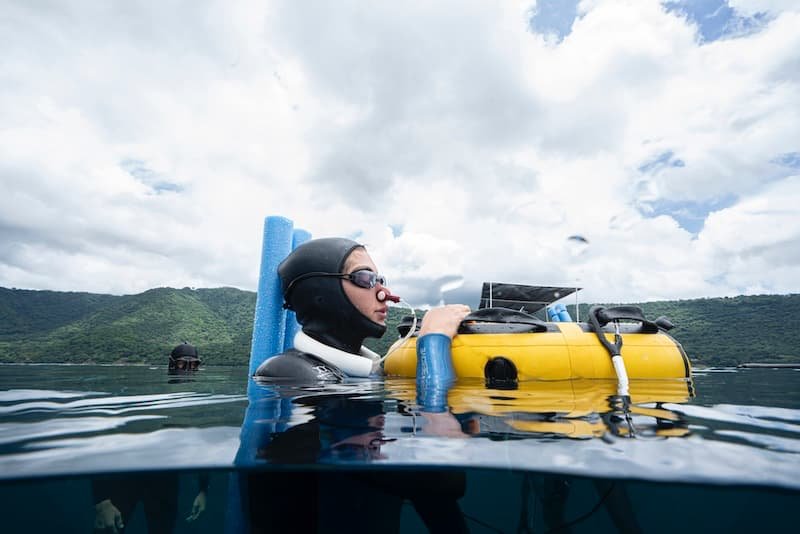
Fasted freediving can be a valuable part of training when integrated intentionally. It sharpens mental focus, improves metabolic flexibility, and deepens the sense of connection with one’s body. But it works best as a contrast to proper fueling, not as a replacement. The most effective divers use fasting strategically, not habitually. They listen to their bodies, alternate between fed and fasted sessions, and ensure that recovery and nutrition remain consistent.
A balanced approach might include light carbohydrate intake before demanding sessions and full fasting during relaxed practice or static training. This preserves both the physiological and psychological benefits of fasting while avoiding the cumulative stress of energy deprivation. The goal is to cultivate awareness, not exhaustion.
The ocean rewards balance more than effort. In its depths, the body’s honesty is absolute. Energy, oxygen, and presence must align. Fasted diving, when practiced mindfully, can reveal that alignment more clearly. It strips away distractions and forces the diver to listen closely to subtle signals, the slowing of the heart, the stretch of the diaphragm, the whisper of the current.
But the same stillness that invites awareness can also hide fatigue. The line between discipline and depletion is narrow. Knowing where it lies is part of the art of freediving.