 Olivia Møller
Freediver - Activist - Explorer
Olivia Møller
Freediver - Activist - Explorer
Share this on
Olivia Møller
Freediver - Activist - Explorer



People often leave the sea feeling like something heavy has lifted from their bodies. It is a sensation difficult to define with precision, yet nearly universal among those who swim regularly in salt water. It is the lightness on the walk home, the clarity in the eyes, the softness in the breath. Some believe it is caused by minerals entering the skin, others by stress leaving the body, still others by a mysterious exchange between flesh and ocean. The truth is more grounded, more complex, and more interesting.
Seawater and human sweat contain similar electrolytes, such as sodium, chloride, and magnesium, although in dramatically different concentrations. That similarity can make the sea feel familiar, as if the body is returning to something ancient. Yet the feeling that emerges after a swim cannot be explained through a simple transfer of minerals because the skin is designed to keep the outside world out. The outer layer of skin, the stratum corneum, is a remarkably effective barrier. It prevents water and solutes from crossing freely, allowing the body to retain its internal balance. Only minimal amounts of minerals are absorbed directly through the skin, far too little to explain the profound sensation of ease that follows immersion.
Something else creates that shift. Something internal. Something systemic.
Salt water envelops the body in a density unfamiliar to everyday life. On land, we bear the full weight of our structure. In water, that burden dissolves. The sea supports the bones and joints, lifts the spine, and allows movement with less strain. The pressure of immersion alters blood distribution, shifting blood from the limbs to the core. Breathing becomes more deliberate. Muscles engage in gentle rhythm rather than abrupt contraction. Sensation dominates. Thought fades. What people feel afterward is the echo of a series of physiological changes woven into a single experience. The sea does not strip stress chemicals from the body directly. Instead, the body processes its own burden more efficiently because the environment allows it to.
And the feeling that follows is the body remembering its own equilibrium.
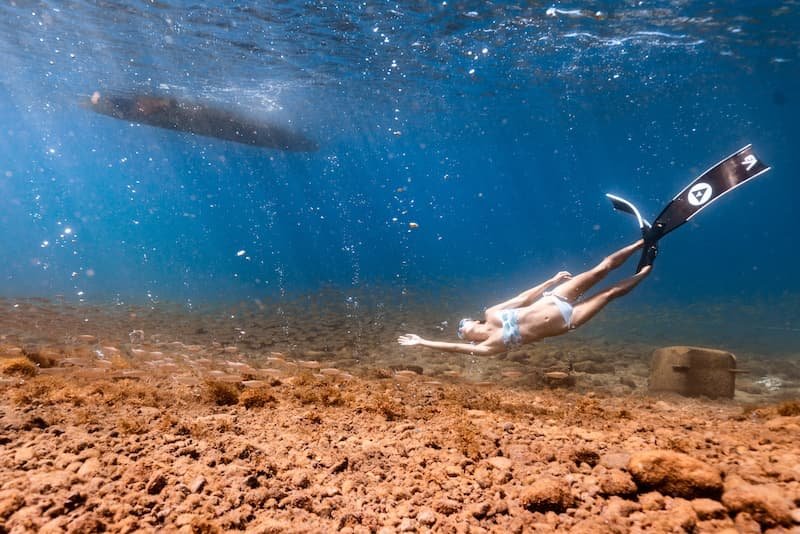
Stepping into the sea is not merely entering water. It is entering a physiological condition. The moment skin meets salt water, environmental triggers begin to influence the nervous system. Cold temperatures stimulate peripheral vasoconstriction, shifting blood toward vital organs. Warmer temperatures increase circulation through dilation. Both responses change the metabolic rhythm of the body. These reactions form part of the mammalian dive response, an ancient reflex present in all humans.
As the head submerges, the heart often slows. This deceleration is not a sign of weakness, but of preservation. The parasympathetic nervous system activates. This is the branch associated with rest, digestion, and recovery. Opposite in tone from adrenaline guided alertness, its effects are subtle at first: relaxation in muscles, deeper breath cycles, a quieter flow of thoughts. Though it happens beneath consciousness, the transition is real and measurable. Research shows that immersion increases heart rate variability, a sign of autonomic balance and stress reduction.
Swimming intensifies this effect through rhythm. Repeated motion in water encourages steady breathing, slow exhalations, and coordinated muscular contractions. Unlike running or cycling on land, the body moves with continuous resistance. This encourages stable pacing and moderates heart rate more naturally than sudden accelerations on dry ground. The body interprets this rhythm as safe, stable, and controlled. The vagus nerve responds. Hormonal output shifts. Cortisol decreases over time with continued immersion and movement.
These changes are not mystical, and yet they feel nearly sacred in their subtlety. The nervous system is not merely slowing down. It is reorganizing itself, recalibrating its priorities, releasing its grip.
This internal shift is one of the primary reasons why swimmers feel different after leaving the water. The sea does not subtract stress from the body by chemical exchange. The nervous system releases stress because the conditions are ideal for release.

There is a physical liberation that happens in water. Weight becomes a memory. Joints, which carry silent burdens through every hour on land, find relief. The spine decompresses. Muscles soften. Buoyancy allows the skeleton to float with dignity instead of bearing constant force. When someone floats, even briefly, the body receives an immediate message: you are safe, you are supported, you can let go.
Hydrostatic pressure applies gentle force on the skin. That pressure encourages fluid movement away from swollen tissues toward the core. It eases lymphatic circulation. It supports venous return. These are subtle processes, invisible to perception, but powerful in consequence. They affect swelling, soreness, and inflammation. They affect the way joints move after leaving the water. They affect recovery.
Water also cools more effectively than air. Even moderate temperatures can reduce inflammation, ease muscular discomfort, and accelerate the removal of metabolic byproducts created during exercise. Again, not by skin absorption into the sea, but by circulation and filtration through internal organs.
Movement through water magnifies these transitions. Resistance is uniform. Muscles work without impact. The body travels through three dimensions instead of two. It becomes something like weightless labor, demanding yet gentle, difficult yet forgiving.
When the session ends, the body recognizes contrast. The return to gravity is noticeable. Muscles feel longer. Shoulders feel freer. The chest feels open. Breathing remains slow. This is why people describe the sensation as floating, even after the water has left their skin. What they feel is the absence of invisible weight.
It is as if water reminds the body that heaviness is temporary.

There is a mental clarity that follows immersion, and it does not emerge by coincidence. Water has a unique effect on attention. The sea floods the senses with constant stimuli: the taste of salt, the coolness of current, the unpredictable rhythm of waves, the shifting light on the surface. These sensations demand presence. They bring the mind into the moment. They create what psychologists call perceptual absorption, the immersion of attention into the immediate sensory world.
Modern life fractures attention. The sea gathers it.
When attention becomes unified, mental strain decreases. Rumination slows. Worry loses volume. The mind becomes quieter because the sensory field is commanding and continuous. After swimming, the brain remains in this cooled state of perception. Thoughts appear more slowly, with less urgency. Problems seem less overwhelming. Perspective expands.
Human cultures have always recognized this. Water is woven into mythology as cleansing, renewing, transformative. It is where transitions occur. It is where burdens are released. This symbolism continues to shape the subjective experience of swimming. The feeling of lightness is also cultural, emotional, and narrative, not only physiological.
The mind interprets the body’s shift as liberation, not because of direct mineral exchange, but because something within realigns.
The sea does not change the composition of blood through the skin. The sea creates the conditions in which the body changes itself.
This is the quiet truth beneath the poetic sensation of emerging new.
The lightness after swimming is real.
It is the combined outcome of nervous system adjustment, physiological relief, sensory immersion, and emotional release.
And in that layered convergence lies the reason we return to the water again and again.
Not to escape ourselves.
But to find ourselves in a different state.