 Olivia Møller
Freediver - Activist - Explorer
Olivia Møller
Freediver - Activist - Explorer
Share this on
Olivia Møller
Freediver - Activist - Explorer



The announcement by Maldives’ government in August 2025 that a dedicated fishery for gulper sharks will reopen in November stunned the global ocean conservation community and raised serious alarm bells among the nation’s own citizens. This decision directly conflicts with the country’s standing as one of the world’s few shark sanctuaries and irreversible damage may follow. In unpacking the “why” behind the policy and the myriad reasons it will likely fail, especially from environmental, ecological, and socio-economic perspectives, it becomes clear the move is at best misguided and at worst deeply destructive.
At the heart of this policy lies a narrative of economic awakening, national sovereignty over marine resources, and perceived under-utilised value in deep-sea shark stocks. President Mohamed Muizzu announcing the reopening of the fishery did so while visiting Kulhudhuffushi City, emphasising the region’s long history of gulper shark fishing as a source of income. He claimed that a comprehensive management plan has been prepared and that fishermen should begin preparing for the return of the fishery. The implication is that the Maldives would unlock value, provide greater livelihoods to remote fisher communities, and bring a new revenue stream to national development.
On one level the argument is one of resource utilisation. If a nation has a marine species stock and technology to harvest it, the logic goes: why not capitalise, provided regulation ensures sustainability? Furthermore the government clearly presents the fishery as controlled. The regulations published in October 2025 allow the fishery only from December to June each year, restrict it to offshore waters outside the atolls and limit licences to a maximum of forty vessels. The government’s position appears to be: we will regulate, we will monitor, we will restrict so that the lucrative opportunity can be realised without catastrophic damage.
Another part of the reasoning lies in development priorities. The Maldives is a country with delicate ecosystems, heavy tourism reliance, and remote island communities with economic vulnerability. The idea of diversifying marine-based livelihoods beyond tourism and reef-fishing may be appealing. By reopening a shark fishery under the banner of conservation-friendly regulation the government can signal both resource sovereignty and new markets.
Thus from the government’s vantage point the calculus is: the deep-sea gulper sharks are under-harvested, we can build in governance, and this will generate income without compromising wider marine health. But that assumption is where the trouble begins.
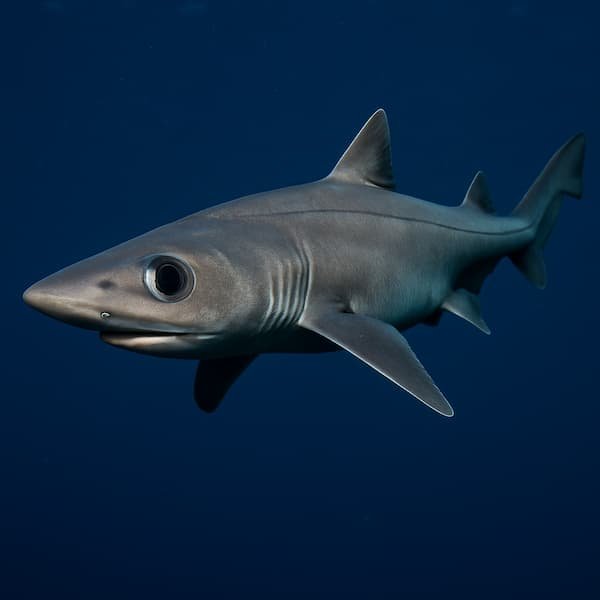
First and foremost the biological reality of gulper sharks betrays the optimism of the policy. Deep-water dogfish species such as those sought in the Maldives grow slowly, mature late, reproduce infrequently and cannot rebound rapidly after exploitation. Scientific reports cite global examples where gulper shark fisheries collapsed within years of opening. In the Maldivian context one authoritative source states that populations fell by approximately 97% between 1982 and 2002, and that the earlier fishery collapsed in less than a decade. When the baseline stock is fragile and recovery slow, any new extraction must be treated with far more caution than is being displayed.
Second, the regulatory framework while superficially reassuring contains critical gaps and raises major red flags. Although licences are capped at forty vessels and seasonally limited, the devil lies in the enforcement, monitoring and ecosystem interconnectedness. The announcement that vessels must carry tracking devices and operate outside atolls is positive in principle, but the actual monitoring capacity of the Maldives to police deep-water longline fleets, with by-catch risk of other sharks, rays and deep-sea species, remains uncertain. By-catch alone may undo the intended limits. Habitat damage from longline deployments in deep water and the ecosystem knock-on effects are not adequately addressed.
Third, the policy disregards the fact that the Maldives’ brand value as a marine-tourism destination rests in part on its conservation credentials, including shark-sanctuary status. As one article states: “Sharks are essential to healthy reefs and power a tourism industry worth far more than any potential gulper shark fishery.” A country with a premium on dive tourism cannot lightly undermine the very wildlife whose presence supports that sector. The poll mentioned in that same article found that more than three-quarters of Maldivians fear reopening the fishery will damage both the marine environment and the economy.
Fourth, the assumption that regulating quantity and season alone suffices does not account for the history of deep-sea shark exploitation. The previous collapse of the fishery in the Maldives underscores the inherent risk: once extraction begins, the marginal economics push fleets to expand, technology improves, and the biology of the species simply cannot sustain the load. The government’s rhetoric of comprehensive management glosses over this structural risk.
Finally, there is the matter of ecosystem connectivity. While the focus is on gulper sharks, what about the rest of the deep-sea community, the rays, the coral outcrops, the prey species and the food-web structure? Deep-sea ecosystems are poorly understood in much of the Indian Ocean. The government’s plan appears to assume that the only species affected is the targeted shark. Ecological science tells us that in heavily connected systems perturbations to apex or mesopredators can trigger destabilising cascades. The weak link is the assumption of isolation.
Putting aside intent, the policy is fundamentally misguided from a conservation point of view. The Maldives, by lifting a 15-year blanket ban on shark fishing for the specific case of gulper sharks, is trading long-term ecological security for short-term extraction. The decision is wrong because of the deeply risky biology of the species, the inadequate assurance of monitoring and enforcement, the clash with tourism-based conservation branding, the poor precedent for deep-sea extraction in fragile systems and the lack of robust scientific baseline data.
When the government acknowledges that the fishery is only for one species but simultaneously licences longlines that may incidentally catch tiger sharks, hammerheads and threshers, the assumption of selectivity is optimistic at best. Where deepwater lines run, the catch rarely respects only one species. By-catch mortality of non-target sharks and rays may well exceed the target catch, compounding the damage.
The economic reasoning is also flawed. The presumed value of a targeted shark fishery may seem attractive, but globally fisheries of this type often yield a handful of vessels chasing diminishing returns as stock declines. The income may be short-lived, while the ecological cost remains indefinite. In contrast the value of a live shark tourism economy tends to persist and can generate decades of compounding value. If the Maldives undermines its own tourism edge, the opportunity cost is large.
Moreover there is the social licence dimension. The poll data show that more than 75% of Maldivians believe reopening the fishery will harm the marine environment and economy. It is imprudent in democratic, stakeholder-dependent industries to move ahead against such broad public concern. The government risks alienating communities and undermining the trust required for conservation regulation.
In terms of biodiversity and global commitments the decision is at odds with the Maldives’ previous leadership as a shark sanctuary and as a conservation pioneer. To undo that status by reopening a fishery for an endangered deep-sea shark species is to accept risk of reputational damage, treaty violations and international criticism. The coalition of organisations including Blue Marine Foundation, Maldives Resilient Reefs and Miyaru Shark Programme have already publicly warned of the consequences.
There is also the sheer imprudence of basing a new extraction policy on limited consultations. Yes, the ministry published a public consultation in October 2025 for the management plan and regulation. But the baseline stock data, ecosystem-wide assessments and long-term monitoring frameworks remain weak. To initiate a fishery without robust science is an approach fraught with ecological risk.
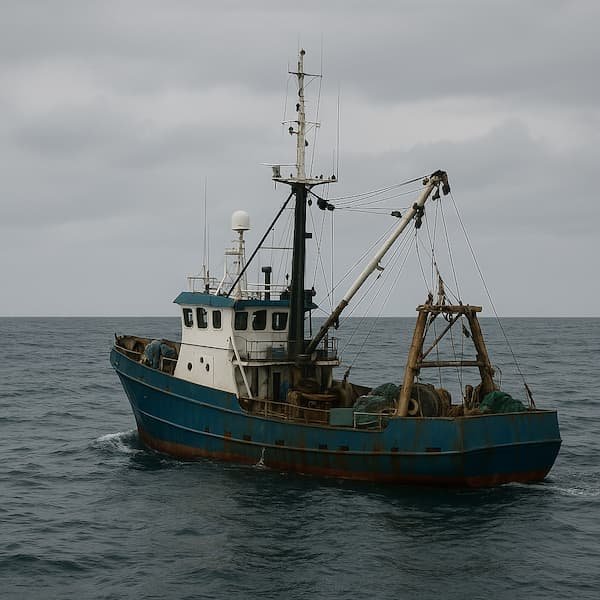
The stakes for the Maldives are high on multiple fronts. Environmentally the reopening of the gulper shark fishery risks triggering a rapid decline in deep-sea shark populations, with knock-on effects for other species, prey systems and reef health. Economically the nation stands to lose more by undermining its tourism brand and marine-based visitor economy than it might gain from a short-lived shark fishery boom. Socially the decision may generate conflict with local communities, conservation NGOs and international partners, eroding trust and future collaboration.
From a marine gear and freediving community perspective, the implications are significant. Freedivers, spearfishers and underwater photographers are drawn to the Maldives for its pristine ecosystems, abundant shark populations and reef health. If deep-water long-line fisheries expand, by-catch and ecosystem disruptions will ripple upward, half-hidden but real in their effect on reef systems, spearfishing opportunities and dive experiences. A policy that undermines ecosystem health undermines the market for high-performance gear too, since the best gear thrives in a healthy ocean environment.
When marketing gear, running educational initiatives or sponsoring freedivers in fragile marine zones, the brand value of sustainability and marine stewardship cannot be divorced from national policies. If the Maldives pivots away from strong shark protection to extraction, it may change consumer perceptions and the ethical story around gear, location, training and freediving travel. In effect the gear you promote, the experiences you craft and the community you build would need to account for a changing marine ecosystem and perhaps a diminished baseline of shark health.
What the Maldives needs is not simply a managed shark fishery but a well-thought pathway that places conservation first, builds science to support any extraction, and aligns with tourism, ecosystem health and community livelihoods in a holistic manner. A true management plan would require transparent baseline stock assessments, independent scientific oversight, phased adaptive management thresholds, by-catch mitigation programmes, real-time monitoring, public reporting, and strong ties to the tourism industry that values live sharks more than dead ones.
Rather than opening the fishery, the government might instead invest in the live-shark tourism economy, support deep-sea research partnerships, establish stronger no-take deep-water zones, and build local capacity in eco-fisheries that value long-term sustainability over immediate extraction. Conservation and economic development need not be in opposition, but the balance has to be skewed where the risk of collapse is real and irreversible.

The decision by the Maldives government to reopen the gulper shark fishery under a comprehensive management plan appears to be grounded in economic development and resource-utilisation thinking. Yet the biology, ecosystem complexity, tourism value, and national brand of the Maldives all point in the opposite direction. The assumption that regulation alone will safeguard deep-sea sharks is overly optimistic; history globally and locally warns against that faith.
In short, this policy is wrong. It gambles with ecosystems that cannot afford the bet, it misreads the comparative value of live sharks to dead ones, it risks undermining a decade of conservation progress and it exposes the nation to ecological, economic and reputational damage. For a country defined by its marine beauty and reliance on healthy oceans, there is no compelling reason to reverse a ban on shark fishing, especially for a species as vulnerable as the gulper sharks. The better path is clear: strengthen protection, invest in conservation as an economic strategy, and keep the Maldives’ waters an exemplar of how the ocean can support prosperity without extraction.